Tech History: The iPod's 25th Anniversary
A quarter-century ago, Apple launched a $399 device that fit a thousand songs into a card-sized package, reshaping how the world consumed music.
By Jennifer Paige ·
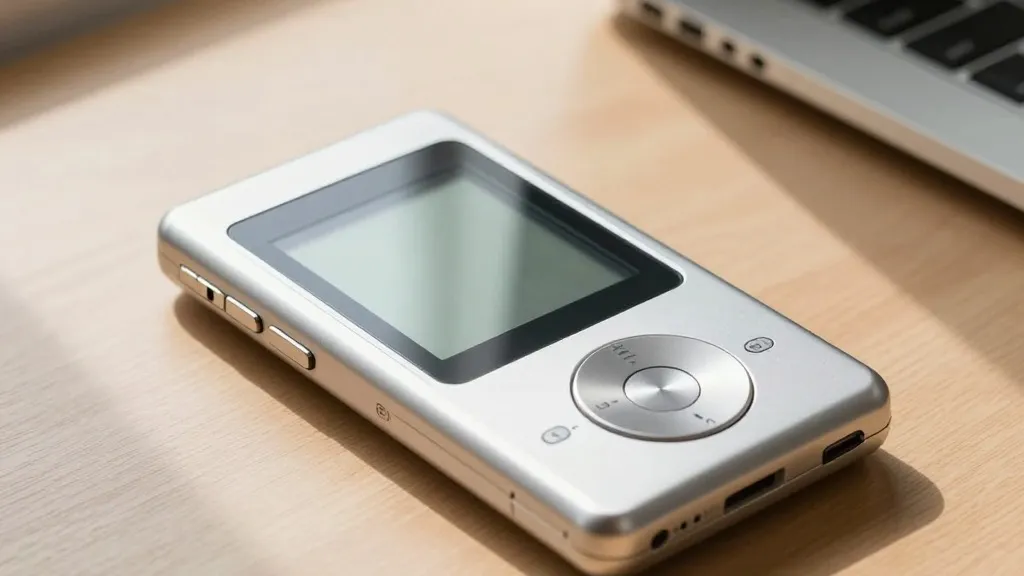
Twenty-five years ago today, on October 23, 2001, Apple CEO Steve Jobs unveiled a device that would fundamentally alter the consumer electronics landscape. The original iPod was introduced not as a computer, but as a breakthrough digital gadget that promised to consolidate a user's entire music collection into a single, pocket-sized unit. Priced at $399, the device launched with a bold value proposition: it could hold 1,000 songs in a form factor no larger than a standard deck of cards.
The introduction of the iPod occurred during a pivotal moment for the Cupertino-based company. Jobs had successfully guided Apple through its early 2000s revival, establishing the Mac OS X era and solidifying the popularity of the iMac and iBook lines. This resurgence happened against the backdrop of the post-dot-com bubble economy, a period of significant financial uncertainty. Jobs envisioned the Mac as the central hub for a user's digital life, connecting various peripherals including digital cameras, camcorders, and portable media players. He reasoned that music was a universal interest and a massive market that lacked a clear dominant player, making it the ideal entry point for Apple's hardware expansion.
At the time of the announcement, the portable music market was fragmented. Competitors such as Sony, Creative, and Sonic Blue had already released digital players, yet Jobs argued that none had perfected the user experience. Four main technologies existed: CD players, MP3 CD players, flash-based players, and hard-disk-based jukeboxes. Apple selected the hard-disk approach as the most viable option for high-capacity storage. The resulting device supported CD-quality audio and popular formats of the era, including MP3, WAV, and AIFF files. Its 5GB storage capacity was specifically calibrated to hold 1,000 standard-length pop songs encoded at 160Kbps, a volume Jobs described as sufficient for most people's entire libraries.
The physical design of the first iPod was a direct result of advances in component miniaturization. The device utilized a 1.8-inch hard drive from Toshiba, which was only 0.2 inches thick. This allowed Apple to create a player measuring 2.4 by 4 by 0.78 inches and weighing just 6.5 ounces. Jobs emphasized that the device was lighter than the majority of cell phones available at the time. Despite its compact dimensions, the hardware included features such as 20-minute skip protection and rapid data transfer capabilities via a single FireWire 400 cable. Apple marketed the iPod as the first and only music player with this specific connection, claiming it could transfer an entire CD's worth of data in five to 10 seconds, a stark contrast to the approximately five minutes required for USB transfers of the same volume.
Powering the device was a rechargeable lithium-polymer battery that provided 10 hours of continuous playback. Apple stated that the battery could be recharged to 80% capacity within one hour. The user interface was highlighted for its minimalist aesthetic and ease of use, featuring a scroll wheel with a piezoelectric clicker for tactile feedback. This design allowed for single-handed operation and quick navigation through playlists, artists, or specific tracks. During the live demonstration, Jobs played the song 'Building a Mystery' by Sarah MacLachlan to showcase the device's audio capabilities and interface responsiveness.
A critical component of the iPod's strategy was its integration with software. Jobs touted the device's ability to auto-sync with iTunes digital music libraries. On the same day, Apple released iTunes 2, which introduced features such as MP3 CD burning and syncing support for the new hardware. This ensured that any music curated on a Mac was automatically mirrored to the portable player during charging or data transfer. Additionally, the iPod functioned as an external FireWire hard drive, adding utility beyond music playback. This seamless integration between the computer and the portable device was a key differentiator in a crowded market.
The impact of the original iPod was immediate, establishing it as the preferred carry-along device for gadget enthusiasts before the smartphone era made dedicated music players obsolete. The first iPhone did not arrive until early 2007, more than five years after the iPod's debut. For over a decade, the two products coexisted within Apple's ecosystem. However, the iPod's relevance gradually diminished as smartphones improved in storage capacity and audio quality. The final model, the 7th-generation iPod Touch, was released in May 2019. Although the product line was left without updates for several years, Apple officially discontinued the iPod in May 2022, marking the end of a product line that had defined a generation of digital media consumption.
Source: Tom's Hardware