Tesla Narrows Unsupervised FSD Promise to Q2 2027 Robotaxi Zones
Tesla’s AI chief clarified that unsupervised driving for customer cars will initially be limited to specific managed fleet areas, rather than offering unrestricted autonomous travel.
By Lauren Collins ·
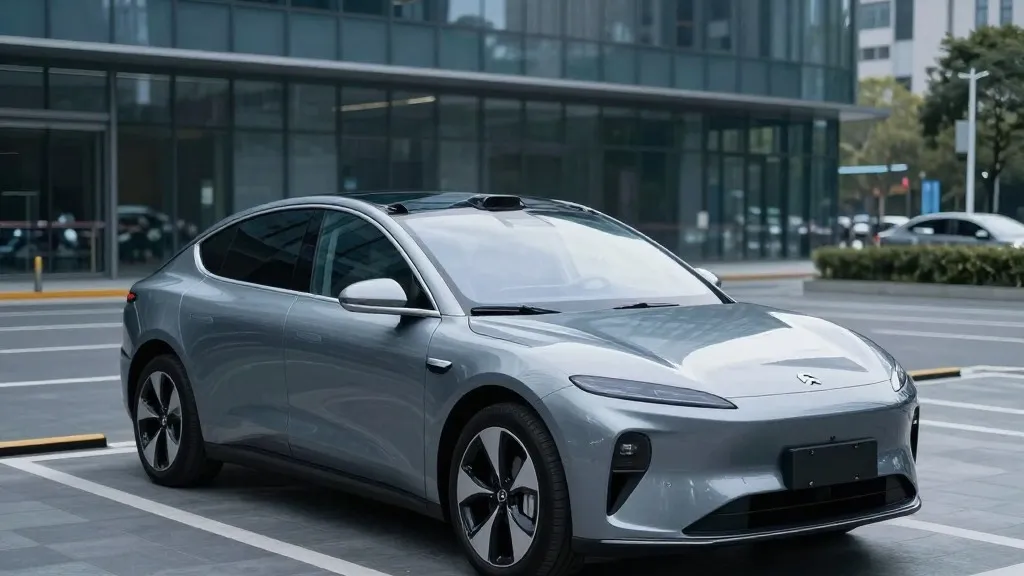
Tesla has officially targeted the second quarter of 2027 for the debut of unsupervised Full Self-Driving capabilities in customer-owned vehicles, a timeline that marks the latest shift in a promise first made nearly a decade ago. During the company’s Q3 2026 earnings call, the specific conditions for this rollout were defined, revealing a significant limitation that may surprise long-time FSD buyers. The feature will not function as a universal software update allowing owners to drive anywhere without supervision; instead, it will operate exclusively within the boundaries of Tesla’s existing managed Robotaxi service areas.
The clarification came from Ashok Elluswamy, Tesla’s head of AI, who responded to a question backed by approximately 1.1 million shares from retail investors. Elluswamy explained that the initial step involves owners integrating their personal vehicles into Tesla’s operational Robotaxi network. This means the car’s autonomous capabilities are tied to the infrastructure and geographic restrictions already in place for the company’s robotaxi service, rather than being a standalone feature available across a broader map.
The geographic scope of this initial rollout is currently quite restricted. Tesla’s Robotaxi service is active in six U.S. metropolitan areas, but the serviceable zones cover only small portions of those cities. For instance, the Miami zone is largely confined to West Miami and a narrow corridor extending toward Doral and Sweetwater. Similar limited geofences were established in Orlando and Tampa in July. Within these designated areas, the service primarily utilizes low-speed routes, avoids highways, and steers clear of more complex urban driving scenarios.
A notable exception to the unsupervised model exists in the Bay Area, where California regulations still mandate a safety driver in every vehicle. This requirement stems from Tesla’s decision not to release specific data to the California DMV, a step necessary for operating beyond level 2 autonomous systems. Consequently, the promise of unsupervised driving in customer cars does not apply to this major market at this time, further narrowing the immediate utility for owners in the region.
The scale of the current fleet also invites scrutiny. Tesla reported that its Robotaxi program accumulated nearly 2 million unsupervised miles by the end of Q3 2026, a figure achieved after the Cybercab joined the Austin fleet. However, third-party tracking data from earlier this year indicated that the number of fully driverless Teslas on the road was in the dozens, a stark contrast to the hundreds of thousands of vehicles Elon Musk had previously suggested. In comparison, competitor Waymo has already surpassed 3 million miles in Orlando and Tampa, markets where it began operations before Tesla’s entry.
This current product definition stands in contrast to the marketing narrative that has accompanied FSD sales since 2016. The original pitch suggested that a software update would eventually allow the car to drive itself anywhere. In July 2025, Musk stated that unsupervised personal use would be available in certain geographies by the end of that year. A year prior, he expressed surprise if the technology wasn't available the following year. Now, with the target set for Q2 2027, the product is more specific: the car joins Tesla’s fleet, operates in Tesla’s zones, and follows Tesla’s operational terms.
Hardware limitations also remain a factor for existing owners. Those who purchased FSD for vehicles equipped with the HW3 computer have been informed that their systems cannot run unsupervised FSD at all, with no clear upgrade path currently outlined. This creates a bifurcated customer experience where the promised timeline applies only to newer hardware configurations, leaving a segment of the installed base waiting for a solution that has not yet been detailed.
Elluswamy attributed the cautious approach to safety, noting it remains the primary bottleneck for expansion. Tesla currently limits its operations to lower-speed roads and less complex environments to manage risk. While Elluswamy suggested these safety issues might be resolved by next year, he acknowledged uncertainty regarding the exact timing. The Q2 2027 date appears to be a best-case estimate based on current progress rather than a guaranteed milestone.
The shift in strategy moves the goalpost from a car that drives its owner anywhere to a car that can function as a robotaxi within a controlled geofence. This limits the immediate practical benefit for owners who do not live and work within one of the six specific service zones. There are no highway road trips, no cross-town airport runs, and no unsupervised commutes outside the designated areas. The feature is essentially a fleet integration tool rather than a universal driving assistant.
As Tesla continues to refine its autonomous driving technology, the focus remains on expanding the geographic footprint and improving safety metrics. The Q2 2027 target will be closely watched by investors and customers alike, particularly given the history of shifting timelines. The success of this rollout will depend on Tesla’s ability to expand its Robotaxi zones beyond the current small slices of major cities and to address the hardware discrepancies between older and newer vehicle models.
Source: Electrek